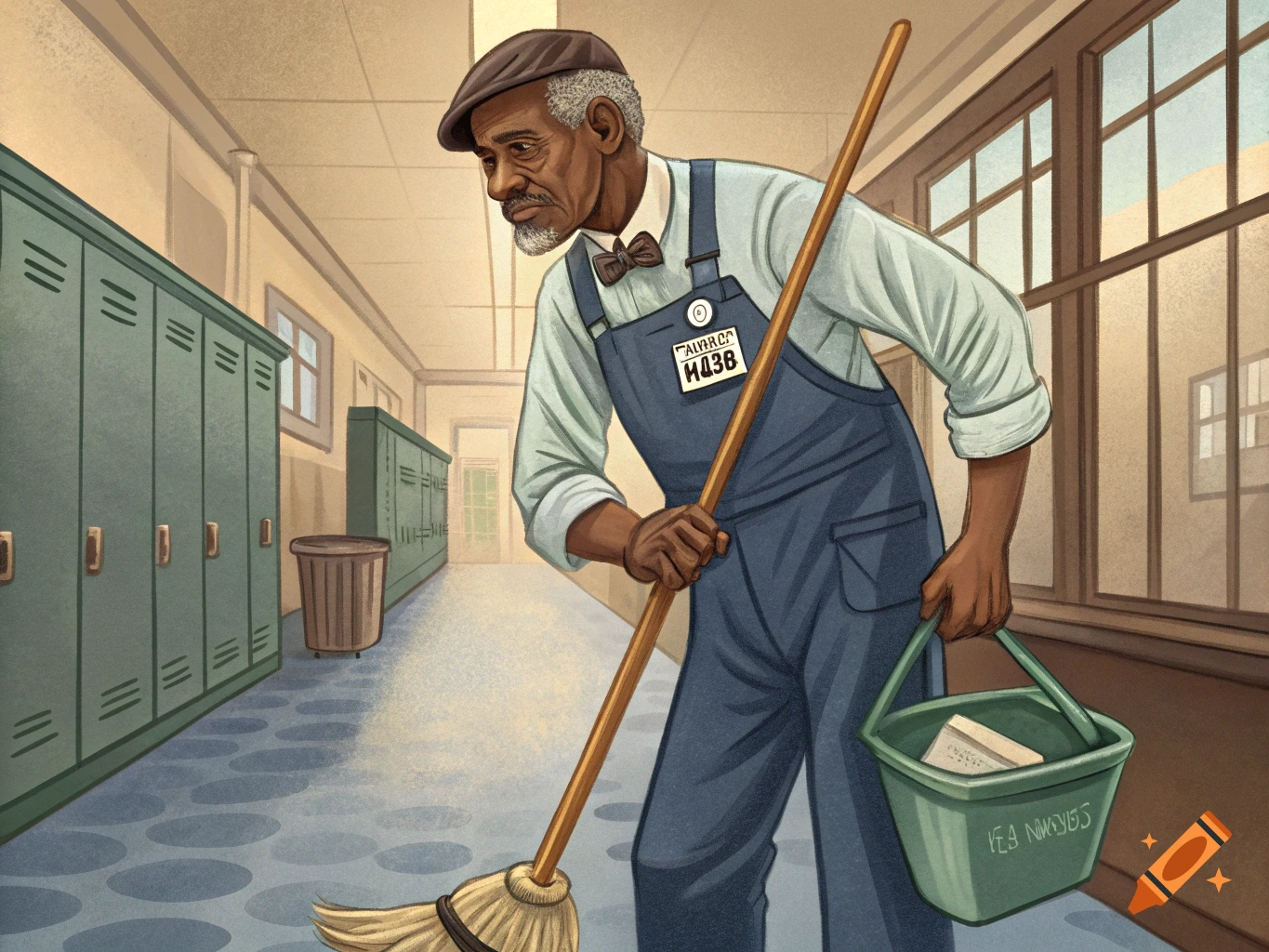
In a world increasingly focused on material success, we often forget the quiet virtues that define our humanity. The narrative of A Poor Boy, a Broken Bicycle, and a Lesson About Dignity serves as a timeless reminder that our worth is not determined by what we own, but by how we carry ourselves in the face of adversity. This story is not merely a tale of financial hardship; it is a profound exploration of human character, self-respect, and the silent strength that comes from maintaining one’s integrity when life offers every excuse to surrender it.

The Story of the Boy and His Broken Bicycle
Every powerful moral lesson begins with a story that resonates with our shared human experience. To understand the depth of dignity, we must look at the lives of those who have the least to lose in terms of material possessions, yet possess the most to protect in terms of character. This is the story of a young boy, his most prized possession, and a day that changed his perspective on self-worth forever.
The Struggle of Poverty and the Broken Bike
In a small, peripheral town where the roads were dusty and opportunities were scarce, lived a young boy named Leo. Leo’s family struggled to make ends meet, living in a modest home where every penny was counted and every resource was stretched to its absolute limit. In such an environment, luxury was a foreign concept, and utility was the law of survival.
Leo’s most treasured possession was an old, rusted bicycle. It was a patchwork machine—assembled from discarded parts, featuring a mismatched frame, a worn-out saddle, and brakes that squealed under pressure. To anyone else, it was junk; to Leo, it was a vessel of freedom, independence, and utility. The bicycle allowed him to travel to the distant school on the other side of the valley, deliver small parcels to earn a few coins for his family, and feel a sense of agency in a world that offered him very little control.

One afternoon, while returning from the market with a basket of goods, the bicycle suffered a catastrophic failure. The chain snapped, the rear wheel buckled, and the frame cracked at the joint. Leo was thrown onto the dirt road. As he stood up and brushed the dust from his knees, he looked down at the mangled heap of metal. The realization hit him immediately: his family could not afford the replacement parts, let alone a new bicycle.
This moment illustrates the unique vulnerability of poverty. For the wealthy, a broken item is an inconvenience; for the poor, it is a structural collapse. The broken bicycle was not just a toy that had ceased to function; it was a lifeline that had been severed. As Leo stood on the deserted road, miles from home, carrying the heavy frame of his broken bicycle, the weight of his economic circumstances pressed down on him more heavily than ever before.
The Encounter That Challenged His Pride
As Leo dragged his broken bicycle along the side of the road, a sleek, modern automobile slowed down beside him. The driver was a wealthy merchant from the town, a man known for his ostentatious displays of charity, which often seemed designed more to elevate his own social standing than to genuinely assist those in need.
The merchant rolled down his window, looked at Leo’s dusty clothes and the ruined bicycle, and smiled with a mixture of pity and condescension. “That piece of trash is finally finished, isn’t it?” the merchant remarked. He reached into his pocket, pulled out a thick wad of bills, and held a significant amount of money out of the window. “Here, take this. Go buy yourself a shiny new bicycle. But first, tell me how miserable it is to walk in the heat, and thank me properly so the people passing by can see how generous I am.”
The offer was incredibly tempting. The money in the merchant’s hand could easily purchase a brand-new bicycle, with enough left over to buy groceries for Leo’s family for weeks. However, the conditions of the offer were clear: Leo was expected to perform his poverty, to play the role of the helpless beggar, and to trade his personal honor for financial relief.
Leo looked at the money, then at the merchant’s expectant, patronizing expression, and finally down at his broken bicycle. He felt a deep warmth rise in his chest—not of anger, but of clarity. He realized that accepting the money under these terms would mean agreeing that his poverty made him lesser, that his struggle gave others the right to patronize him.
With a calm, steady voice, Leo looked the merchant in the eye and said, “Thank you for your offer, sir, but I cannot take your money. My bicycle is broken, but my legs are not. I can walk, and I will find a way to fix my own bike.”
The merchant, surprised and slightly offended by the rejection of his performative charity, rolled up his window and drove off, leaving a cloud of dust behind. Leo was left alone on the road, still carrying a heavy, broken bicycle, with a long walk ahead of him. Yet, as he walked, his posture was upright, and his heart was light. He had protected something far more valuable than a machine: his dignity.
Understanding the True Meaning of Dignity
The narrative of A Poor Boy, a Broken Bicycle, and a Lesson About Dignity serves as a perfect case study for analyzing the philosophical and psychological dimensions of human dignity. Dignity is a concept frequently discussed but often misunderstood in modern discourse. It is not synonymous with pride, nor is it something that can be granted or stripped away by external forces unless we allow it.
Why Dignity Matters More Than Material Wealth
In a consumerist society, we are constantly bombarded with messages suggesting that our value as individuals is directly tied to our material wealth, our social status, and the brands we consume. Under this framework, poverty is often treated not just as an economic condition, but as a moral failure.
However, true dignity—often referred to in philosophical terms as inherent worth—exists independently of material circumstances. The German philosopher Immanuel Kant argued that things have either a price or a dignity. What has a price can be replaced by something else as an equivalent; what is above all price, and therefore admits of no equivalent, has a dignity.
| Aspect | Material Wealth | Human Dignity |
|---|---|---|
| Source | External (money, possessions, status) | Internal (self-respect, moral integrity) |
| Stability | Highly volatile; can be lost instantly | Permanent; cannot be taken without consent |
| Social Value | Confers power and temporary influence | Earns genuine respect and builds character |
| Acquisition | Through labor, inheritance, or luck | Through ethical choices and self-discipline |
When Leo refused the merchant’s money, he made a clear distinction between price and dignity. The merchant believed that everything, including Leo’s self-respect, had a price. By declining the offer, Leo demonstrated that his humanity was not a commodity for sale. This choice highlights why dignity matters more than wealth: wealth can buy comfort, but it cannot buy the peace of mind that comes from knowing you have remained true to your moral principles.

How Self-Respect Shapes Our Choices
Self-respect is the practical application of dignity. It is the internal compass that guides our decisions, particularly when we are faced with difficult choices where the easy path requires a compromise of our values.
When we possess self-respect, we set boundaries for how we allow ourselves to be treated by others. We recognize that we are worthy of respect, not because of what we have achieved or what we own, but simply because we are human beings. This recognition shapes our choices in several key ways:
- It prevents exploitation: Individuals with high self-respect are less likely to tolerate abusive or demeaning treatment, even if tolerating it offers short-term material benefits.
- It fosters independence: Self-respect drives us to rely on our own capabilities and effort rather than seeking handouts that come at the cost of our autonomy.
- It promotes ethical behavior: When we respect ourselves, we are less likely to engage in behaviors that we find morally objectionable, as doing so would damage our self-image.
In the story of the broken bicycle, Leo’s self-respect allowed him to see past his immediate physical need (a working bicycle) to protect his long-term psychological well-being. Had he accepted the money, he would have ridden home on a new bicycle, but he would have carried the silent burden of knowing he had compromised his pride for it. By choosing the harder path, he preserved his self-respect, which ultimately provided him with the strength to overcome his circumstances.
Key Life Lessons from the Story
The story of the boy and his bicycle is rich with practical wisdom that can be applied to our daily lives. It offers valuable insights for parents, educators, and anyone striving to navigate the complexities of modern life with grace and integrity.
Teaching Children the Value of Dignity
In an age dominated by social media, where children are exposed to constant comparisons based on lifestyle, clothing, and gadgets, teaching the value of dignity has never been more critical. Children must learn that their self-worth is not a reflection of their parents’ income or the popularity of the brands they wear.
To instill this lesson in the next generation, we must focus on several educational pillars:
- Praising effort and character over outcomes: Instead of praising children solely for their achievements or possessions, we should highlight their integrity, kindness, resilience, and honesty.
- Encouraging autonomy: Allow children to solve their own problems and face minor hardships. When we step in to solve every difficulty with money or influence, we deprive them of the opportunity to build self-reliance.
- Modeling respectful behavior: Children learn by observing. If they see adults treating service workers, the poor, or the marginalized with condescension, they will learn to equate human value with social status. Conversely, showing respect to everyone, regardless of their position, models true dignity.
By teaching children that dignity is an internal quality, we equip them with a psychological shield against peer pressure, bullying, and the anxieties of materialism.
Overcoming Adversity with Grace
Adversity is an inevitable part of the human condition. Whether it manifests as economic hardship, health challenges, or professional setbacks, we will all face moments when our “bicycles” break down, leaving us stranded on a difficult road.
Overcoming adversity with grace does not mean pretending that pain or difficulty does not exist. Rather, it means facing those challenges without losing our moral grounding. It involves:
- Accepting reality without resentment: Leo did not waste energy cursing his poverty or feeling envious of the wealthy merchant. He accepted the broken bicycle as a reality and focused on what he could control—his response.
- Maintaining composure: Responding to insults or condescension with anger often validates the offender. Responding with quiet, polite resolve, as Leo did, disarms the antagonist and preserves one’s grace.
- Believing in one’s agency: Graceful resilience is rooted in the belief that while we cannot always control our circumstances, we always control our character and our choices.
When we face life’s trials with dignity, we transform our struggles from moments of victimization into opportunities for character development. The broken bicycle ceases to be a symbol of misfortune and becomes a testament to our capacity to endure and overcome.
Frequently Asked Questions (FAQ)
To further clarify the concepts explored in this article, here are answers to some of the most common questions regarding dignity, pride, and the moral lessons of this story.
What is the moral of the broken bicycle story?
The core moral of the story is that human dignity and self-respect are priceless assets that should never be sacrificed for material gain or temporary convenience. The story demonstrates that poverty is not a reflection of a person’s worth, and that true nobility lies in how we handle adversity. By refusing to trade his self-respect for a patronizing handout, the boy showed that maintaining one’s integrity under pressure is the ultimate form of strength and independence.
How does dignity differ from pride?
While the terms “dignity” and “pride” are often used interchangeably, they represent very different psychological states:
- Dignity is quiet, internal, and universal. It is based on the belief that all human beings possess inherent worth and deserve respect. Dignity is not competitive; it does not require looking down on others to feel valuable. It is characterized by humility, self-respect, and moral consistency.
- Pride, particularly in its negative sense, is external, comparative, and often fragile. It is based on a desire to appear superior to others, whether through wealth, status, or achievement. Pride is easily wounded by criticism or perceived disrespect and often leads to defensiveness, arrogance, and conflict.
In the story, the wealthy merchant acted out of pride, seeking to display his superiority through condescending charity. The boy, on the other hand, acted out of dignity, seeking only to preserve his self-respect without the need to prove himself superior to anyone else.